24 Dates in 2024 – #21

The way I was taught history from K-12th grade, in hindsight, was 100% absurd.
As I recall, the subject matter was presented as a series of disjointed dates and timelines marked by war, out-of-context policy, and out-of-control power.
I thought history had little to nothing to do with me.
Until I took my first required college course, the history of music. Pair anything with music, and you have 110% of my attention. Little did I know that course would ignite a passion for a deeper understanding of the world around me and how the DNA of the past influences so much of the present.
I had the privilege of having the late great Jackie McLean as one of my professors. Aside from being an incredible saxophonist who played with some of the greats like Thelonious Monk and Charlie Parker, he regularly poured his knowledge of music history into students. He would shape a generation of new musicians and artists, helping to preserve the history of the arts and music of the African Diaspora through his Artist Collective Inc. organization in Hartford, CT. The man knew his stuff, and it was my pleasure to spend time with him.
My love for history was ignited by someone who presented it in an enthusiastic way that made connections, and I have always been drawn to human stories. History, after all, is the story of us. This journey of discovery has not only deepened my understanding of the world but also transformed me, shaping my perspectives and values.
I was also acutely aware that not all stories are told or taught, so my higher education was filled with subject matter not shared in my early education journey: African American History, Women in History, Cross-Cultural Communications, History of Latin America, and international law, to mention a few.
When I finally graduated college, I had enough credits to leave UCONN with two degrees. I only got one.
When Ken asked if I wanted to take a historic walking tour, I was more than in! Date #21 of our 24 dates in 2024 included The Preserving Black Haddonfield History Project walking tour.
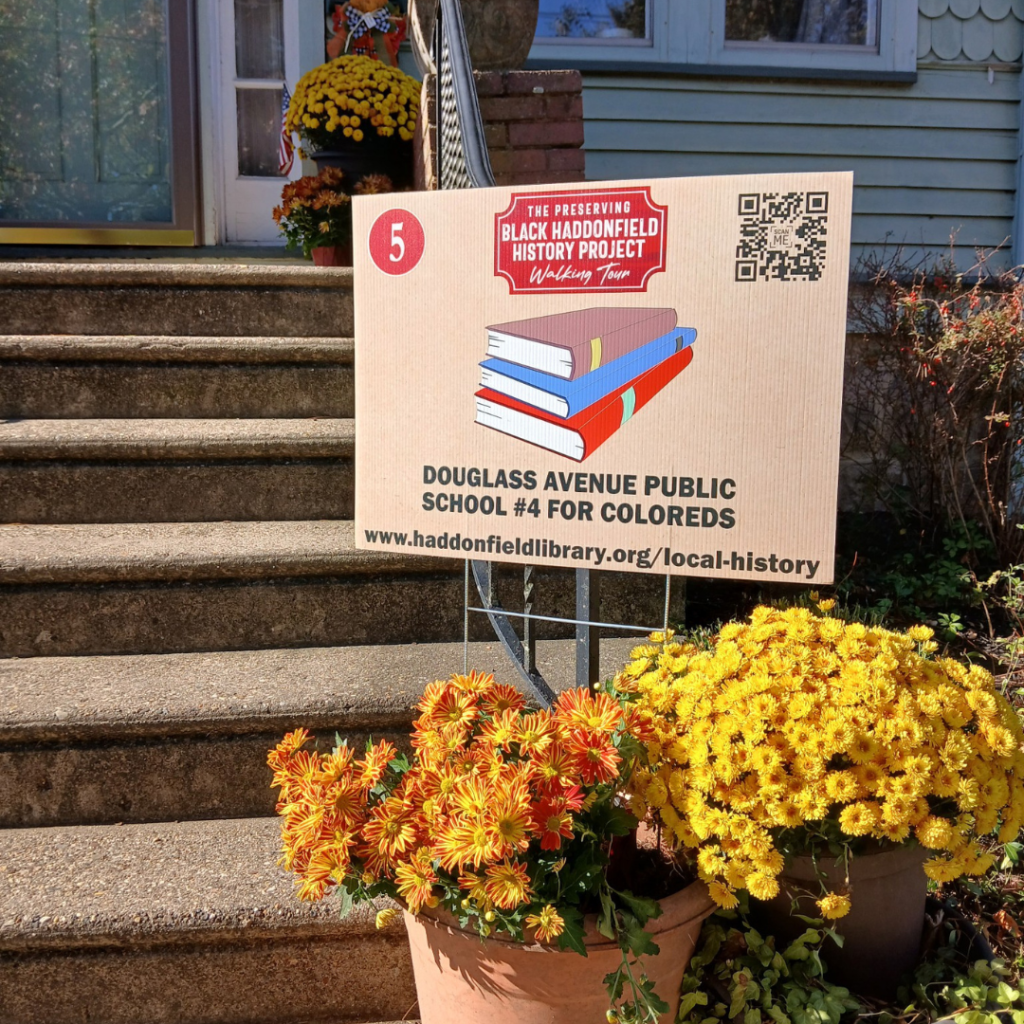
The tour included a dozen sites such as Batesville Bridge, which was part of the route for the underground railroad that leads to Croft Farm in Cherry Hill, Mount Olive Baptist Church, initially built in 1892, which served as the epicenter of community for over 100 years, Douglass Ave Public School built in 1904 for “colored” students in Haddonfield which lacked lights and plumbing. The school remained in session until 1948 when New Jersey’s 1947 constitution outlawed overt segregation in schools, a decade before the Supreme Court Ruling Brown v. Board of Education decision. New Jersey would be the only state with such an explicit provision in its constitution.
There were other sites during the tour. Still, the single most mind-blowing site would be the place where we started and ended the tour of Centennial Field, which reportedly once featured a Negro Baseball Team of the Negro Baseball League that also served as a natural barrier between the African American community and the broader population.
This same field would be where our boys would play countless pickup games of football and soccer with friends of every shade, race, and gender.
I had visited this place countless times without any idea or consideration for how the field was used as a source of division. I could not get out of my mind the men who had been relegated to the Negro League and relegated in life.
I envisioned their shadows on the field and wondered if they ever thought this space would be just a field to play on. If they dreamed about a nonsegregated world and what it looked like when catching pop-ups and slamming home runs. If they ever thought of future young men like our boys and a field of dreams for them.
 24 Dates in 2024